Chapter 4 — Meeting a Bergmännlein in the forests of Pilatus
A climb on foot from Alpnachstad to the summit of Pilatus, a little man in the mist, then a ride down by cable car and a day at the library. This page follows the route and tells who the “little men of the mountains” are.
The route of chapter 4
- 1AlpnachstadThe cogwheel railway station and its metal dragon.on foot: Langenschwand forest
- 2ÄmsigenAn old stop where the steam locomotives took on water.on foot: alpine pasture, Chilchsteine, ibex
- 3Pilatus KulmThe hotel in the fog, the yellow-billed choughs.“Dragon Ride” aerial cableway, above the Klimsenhorn chapel
- 4FräkmünteggChange of cabin.gondola via Krienseregg
- 5Kriens, then LucerneBus into town. The next day: the library (ZHB).
The places in the chapter
Alpnachstad and the cogwheel railway
In the book: first scene
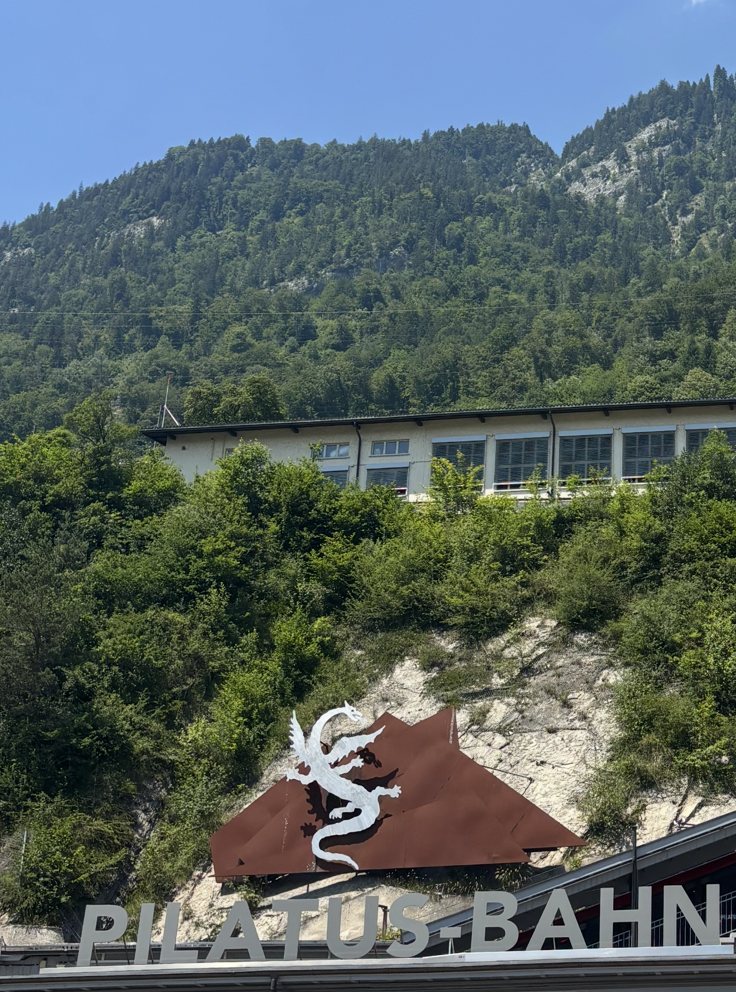
Since 1889, the Pilatus railway has climbed from Alpnachstad to Pilatus Kulm on a gradient of up to 48% in places. It is the steepest cogwheel railway in the world; the journey takes about half an hour. You can also do the “Golden Round Trip”: boat from Lucerne, cogwheel railway, then cable cars down to Kriens.
The path via Ämsigen
In the book: first and second scenes
The classic path from Alpnachstad to the summit: about five hours and more than 1,600 metres of ascent, through the Langenschwand forest, Ämsigen and the Chilchsteine. Lower down, beeches, silver firs and maples; higher up, spruces, then the alpine pasture, mountain pines and alpenroses.
The ibex of Pilatus were reintroduced in 1961; today there are about a hundred of them.
The Bergmännlein, little men of the mountains
In the book: all three scenes
Collections of legends from Central Switzerland, such as Alois Lütolf’s (1862), often speak of the Bergmännlein: the size of children, dressed in skins, they live in caves, help those who respect the mountain and punish the greedy. Around them live the Wildmannli and Wildwybli, the wild men and women of the forests, and the Toggeli, who sits on sleepers’ chests at night.
These tales pass on very practical rules: watch the sky, respect the places, listen to those who know the mountain.
Pilatus Kulm
In the book: third scene
The Pilatus-Kulm hotel was built in 1890, a year after the railway. Before it, in 1868, Queen Victoria rode up here on a mule, incognito. On the railings, yellow-billed choughs wait for visitors’ crumbs.
The Klimsenhorn chapel
In the book: third scene
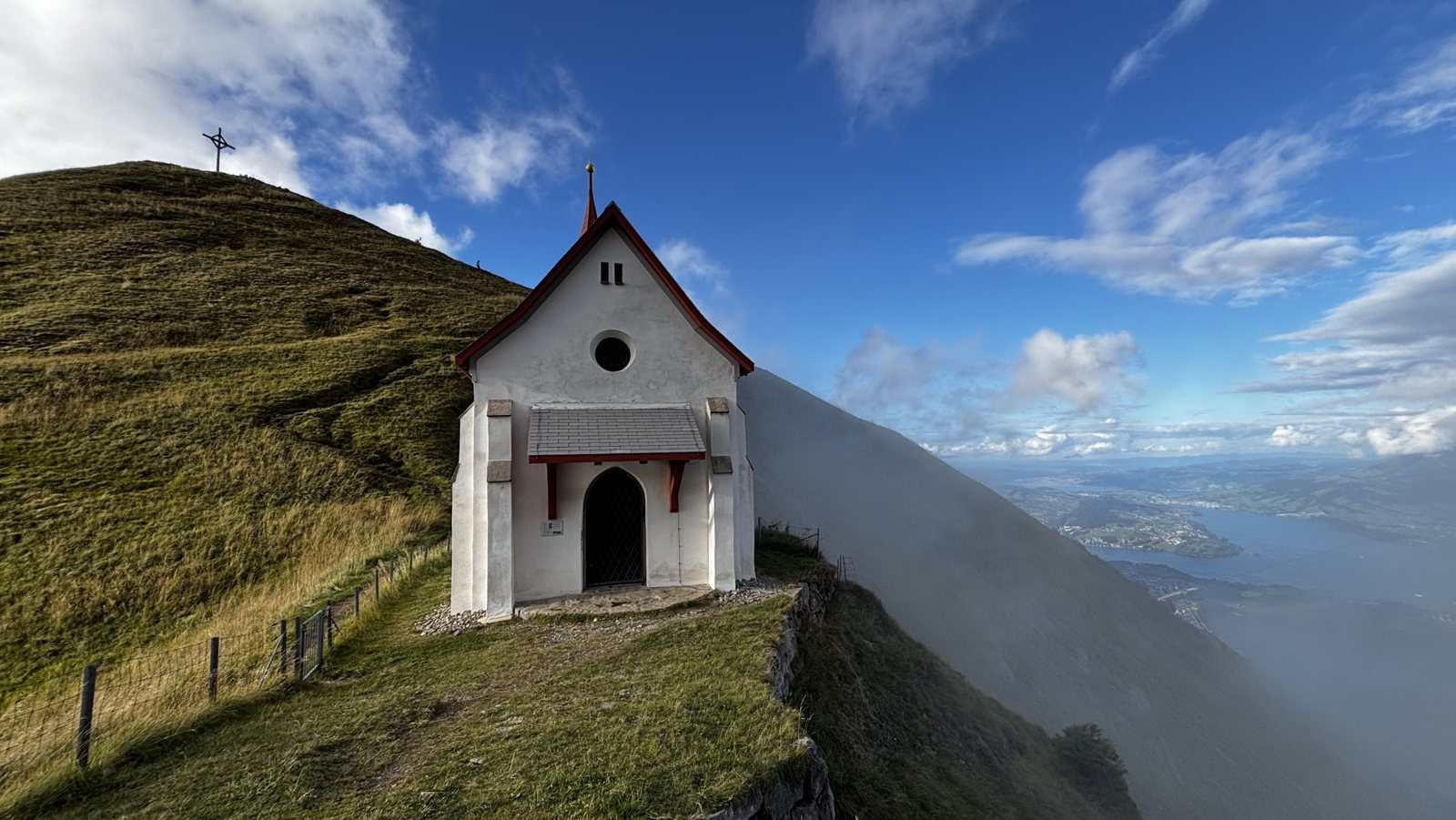
A small white chapel consecrated in 1861, alone on a grassy pass at the edge of the drop, facing the lake. It stood next to an old spa hotel, since demolished. You can see it from the cable car between the summit and Fräkmüntegg, and you can walk up to it.
The Lucerne library (ZHB)
In the book: third scene
The Zentral- und Hochschulbibliothek, beside the little Vögeligärtli park. The renovated 1951 building is arranged around a large light well over five floors; part of its collections comes from the old Jesuit college. This is where Véronique looks for the little beings of the mountains.
Yarrow
In the book: second and third scenes
Achillea millefolium, “Achilles’ herb”, which is said to have healed his soldiers’ wounds. It has been used since antiquity to stop bleeding and soothe stomach aches. It grows everywhere in mountain meadows.
True or invented?
The book mixes real places, old legends and invented scenes. Here is which is which.
Fact: verifiable (date, place, building). Legend: a traditional tale, told as such. Novel: created for the book.
Fact sheets to go further
Each legend and each topic will have its own full fact sheet, for travelling, discovering or doing research.
- The Bergmännlein and the little people of the mountainscoming soon
- The Pilatus cogwheel railwaycoming soon
- Queen Victoria on Pilatuscoming soon
- The plants of Pilatus: yarrow, gentian, alpenrosecoming soon
Sources
- Pilatus-Bahnen, the cogwheel railway
- Lucerne Tourism, from Alpnachstad via Ämsigen to Pilatus Kulm
- Alois Lütolf, Sagen, Bräuche und Legenden aus den fünf Orten Luzern, Uri, Schwyz, Unterwalden und Zug, Lucerne, 1862
- Märchenstiftung, the mountain dwarfs (PDF)
- ZHB Luzern